The "duty to mitigate loss" is a rule of contract law. It is linked to a problem between people who have a contract (such as a tenancy agreement) together. If one person breaks (breaches) the contract, the law says the other person has to make sure that any costs associated with the breach are kept to a minimum.
The Residential Tenancies Act (RTA) refers to the duty to mitigate loss. Section 58 of the RTA says that the duty to mitigate loss applies to tenancy agreements.
Contract laws about the duty to mitigate loss are based on cases which have been heard by courts over many years. How this rule applies to you depends on the particular facts of your case.
Here is an example of a tenant's duty to mitigate loss:
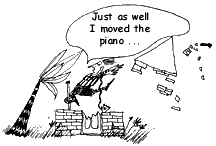
An owner failed to keep the premises properly maintained and the ceiling started to come down. The owner was therefore in breach of the tenancy agreement. The tenant sent a letter telling the owner and asking them to fix it quickly. The owner wanted to get quotes and the tenant realised that this would take time and that their furniture and TV might get wrecked while this was going on. Luckily, the tenant moved all their belongings into another room because the ceiling did collapse. The tenant may not have been able to claim the cost of their losses if the belongings had been left there: the tenant had a duty to minimise any possible loss from the owner's breach of agreement. In this case the tenant met their duty by moving their belongings.
To break a fixed term agreement early the tenant has to get the owner/agent to agree. (See section 4.2 Ending a Fixed Term Agreement for more information). Once the owner/agent agrees to the early termination, the duty to mitigate loss applies, and the owner/agent must take all reasonable steps to keep costs to a minimum.
In this situation the tenant must pay to the owner any costs associated with breaking the agreement. For example, advertising costs and rent until new tenants move in. At the same time the owner has a duty to ensure that these costs are kept to a minimum. However, the owner is only obliged to take all "reasonable" steps, not anything extravagant or unusual.
Here is an example:
In a case before the court, an owner was claiming loss of rent because the tenants broke their tenancy agreement by ending it early. The parties had agreed that the owner would find new tenants and rent would be paid until the new tenants moved in. The tenants gave evidence that they had given one month's notice that they had to leave and the owner had accepted this. However, the owner did not start advertising until the tenants moved out of the place. The court decided that the tenants didn't have to pay all the rent claimed because the owner had failed to mitigate his losses by advertising earlier.
When an owner and tenant do not reach an agreement about ending a fixed term tenancy, and the tenant leaves anyway, the tenant has "abandoned" the property.
Section 78 of the Residential Tenancies Act says that when a tenant abandons the property, the owner shall take all reasonable steps to mitigate their loss. It also says that the owners will not be entitled to compensation for any loss that could have been avoided, if they had taken those reasonable steps.
In one case, the tenant abandoned the premises after giving notice that he was leaving. The owner knew the tenant had moved out and also knew his forwarding address, but did nothing until the end of the tenancy agreement months later. The owner then applied to the court claiming thousands of dollars in rent. The owner's application failed because she failed to minimize her own losses.
Please note:- Even though these decisions were made in the above cases, it does not mean that you will get the same decision if your case is similar. In other words, there is no such thing as a precedent in the Small Disputes Division of the Local Court where tenancy disputes are heard. The Court is not bound by earlier decisions. Cases are decided by a Magistrate or Clerk of Courts, using their own understanding of the law in each particular case.
Make sure all the terms of the agreement about what you and the owner agree to do are in writing. For example, who will pay for what and when.
Here are some tips if you are ending your agreement early:
You can't always make sure the owner/agent minimises any losses, but you can try to make sure you know what they should have done. That way, if the owner's claim for compensation is unreasonable you are able to prove it.
Back to During the Tenancy menu