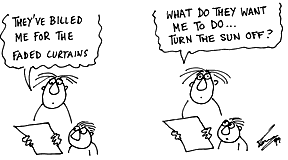
Fair wear and tear is often an issue:
The Residential Tenancies Act (1987) does not define fair wear and tear.
However, from previous court cases we know that generally, fair wear and tear means any damage that occurs through:
Although the Residential Tenancies Act 1987 doesn't mention fair wear and tear, the Act does set out the tenant's responsibility for cleanliness and certain repairs (s38). Under this section you have the responsibility to
If you have done these three things you can argue that the owner is responsible for fixing any damage (as set out in section 42 of the Residential Tenancies Act ) see section 3.2 Maintenance and Repairs for more information.
Generally, you are not responsible for fair wear and tear. However you must check your tenancy agreement for any clauses that state you are responsible for fair wear and tear. The Residential Tenancies Act allows owners to contract out of some of their obligations. This means that an owner/agent can, in a written agreement, opt out of some of their responsibilities under the Act. See section 2.8 The Tenancy Agreement for more information on contracting out.
Fair wear and tear can be an uncertain issue if the cause of the damage is disputed.
Here are some examples of what could be considered fair wear and tear and what probably wouldn't be:
| Fair Wear and Tear (Owner / agent responsible) | Careless or Negligent Damage (tenant responsible) |
|---|---|
| Cracked window pane due to old warped frames | Cracked window pane from carelessly slamming window shut. |
| Garden mulch breaking down over time. | Tenant's dog digging up garden mulch. |
| Paint fading and discolouring over time. | Paint discolouring through candle smoke. |
| Plaster cracks as building settles. | Plaster chipped by nails being hammered in. |
These are examples only . In many cases the cause of damage is not clear cut. When a case comes before the Court, any decision will be made according to:
If the owner/agent is trying to charge you for damage which you believe is fair wear and tear, you should question the charge. It is always good to explain in writing why you disagree with an owner/agent's claim. See section 3.11 Writing a Letter to the Owner/Agent for more help with this.
If a dispute over fair wear and tear can't be resolved by negotiation, either party can take the case to court and ask for a decision on what is fair in the circumstances. See section 6.2 Going to Court for more information.
Back to Getting the Bond Back menu